In this article
Editorial update: September 29, 2026. Text prepared with AI support from the indicated sources. No independent clinical review. General information, not an individual meal plan.
Meal preparation tools: Amazon Spain
As an Amazon Associate I earn from qualifying purchases.
Use the tools you already own. If you need to compare options, these links open searches on Amazon Spain. Check materials, capacity and delivery to your country.
Short answer
A ketogenic menu combines three things in each meal: a fat source, a moderate amount of protein, and low-starch vegetables, normally staying below 50 g of carbohydrates per day. Below is a 7-day example for inspiration; it is illustrative and does not replace a plan made with a dietitian.
How to build a ketogenic menu
There is no standard keto menu. Popular materials suggest, on average, 70% to 80% of calories from fat, 5% to 10% from carbohydrates, and 10% to 20% from protein; in a 2,000 kcal diet, this equals about 165 g of fat, 40 g of carbohydrate, and 75 g of protein. Protein is moderate because, in excess, it can hinder ketosis.
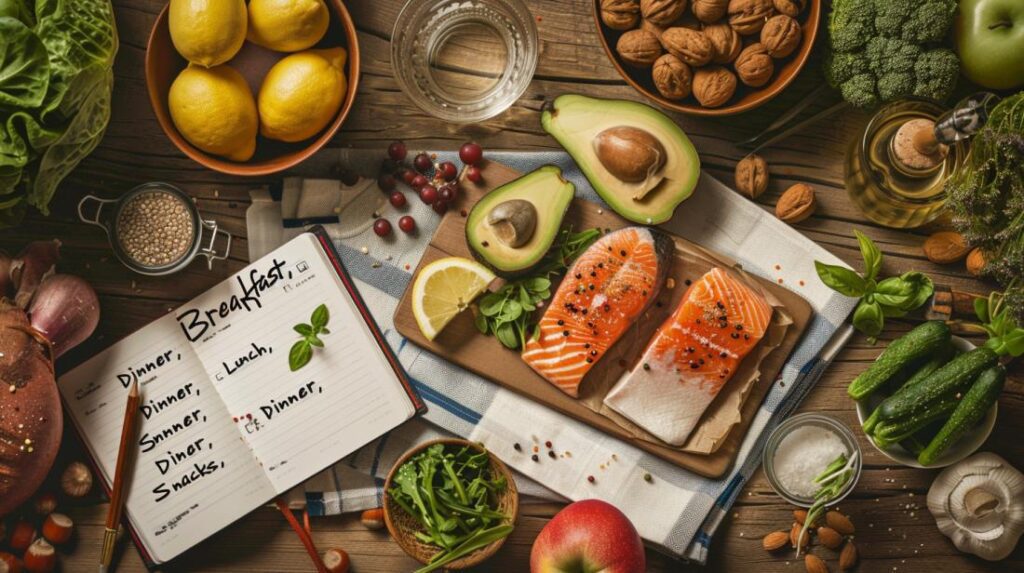
- Fats: olive oil and other vegetable oils, coconut oil, avocado, coconut, macadamia, nuts, almonds, pecans, and sunflower, pumpkin, sesame, and flax seeds; butter and hard cheeses can be included.
- Proteins: beef, chicken and other poultry, pork, bacon, fish, organ meats, eggs, and tofu.
- Vegetables: kale, Swiss chard, spinach, lettuce, cauliflower, broccoli, Brussels sprouts, asparagus, bell pepper, onion, garlic, mushrooms, cucumber, celery, and zucchini.
- Extras: berries in small portions, chocolate with 90% cocoa or more, cocoa powder, coffee and tea without sugar, sugar-free vinegars and mustards, herbs and spices.
Walter Willett, professor at Harvard, suggests prioritizing unsaturated fats (nuts, seeds, avocado, vegetable oils, and fatty fish) over saturated ones, since there are no long-term studies with people on keto. The list of allowed foods offers more options and helps read labels.
Example of 7-day menu
Illustrative example, without portions or carbohydrate counting. For a 5-day menu, use days 1 to 5.
Day 1
- Breakfast: scrambled eggs in butter with spinach
- Lunch: grilled chicken with lettuce and cucumber salad, avocado, and olive oil
- Dinner: baked fish with broccoli and garlic butter
Day 2
- Breakfast: mushroom omelet with Parmesan cheese
- Lunch: sautéed ground beef with onion, garlic, bell pepper, and riced cauliflower
- Dinner: baked sardine with grilled zucchini in olive oil
Day 3
- Breakfast: boiled eggs with avocado and pumpkin seeds
- Lunch: sautéed liver with onions and sautéed kale in olive oil
- Dinner: grilled tofu with broccoli and sesame
Day 4
- Breakfast: spinach omelet with grated hard cheese
- Lunch: roasted pork loin with Brussels sprouts in olive oil
- Dinner: shredded chicken with leaves, cucumber, and celery, dressed with olive oil and sugar-free mustard
Day 5
- Breakfast: fried eggs in olive oil with bacon
- Lunch: grilled fish with asparagus in butter
- Dinner: stewed beef with mushrooms and celery, no flour
Day 6
- Breakfast: scrambled eggs with onion and bell pepper and unsweetened coffee
- Lunch: roasted chicken with Parmesan-gratinated cauliflower
- Dinner: stuffed zucchini with ground beef and hard cheese
Day 7
- Breakfast: boiled eggs, a handful of almonds, and unsweetened tea
- Lunch: grilled beef with leaf salad, cucumber, and olive oil
- Dinner: mushroom and spinach omelet; for dessert, a few strawberries
What is excluded from the menu
Bread, rice, pasta, cereals, cookies, and other grain and flour products; potato, corn, and other starchy vegetables; beans, lentils, peanuts, and other legumes; fruit juices, most fruits, and sugar, added or natural. Heavy cream, ice cream, and whole milk are also often restricted due to lactose.
In beverages, coffee and tea without sugar are allowed. Most programs restrict regular wine and beer and sugary drinks; some allow small amounts of spirits or low-carb wines and beers.
Tips for weekly shopping
Make the list from the menu: eggs, one or two proteins per day, leaves and vegetables for the week, avocado, olive oil, butter, a hard cheese, and an oilseed. For seasonings, prefer sugar-free vinegars and mustards and check the label. To organize the first week, the step-by-step guide to start helps.
Who should adapt with a dietitian
Ideally, everyone: since entire food groups leave the plate, a dietitian can adjust the menu to reduce the risk of missing nutrients and, later, guide the return of carbohydrates. Harvard recommends consulting a doctor and dietitian before starting, and this weighs even more if you have a condition, take medication, are pregnant or breastfeeding; there are still doubts about keto safety in kidney and liver disease and in pregnancy, breastfeeding, childhood, and adolescence. See also risks and precautions before starting and what to expect from results in 30 days.
Sources
- Harvard T.H. Chan School of Public Health, The Nutrition Source: Diet Review: Ketogenic Diet for Weight Loss
- Harvard T.H. Chan School of Public Health, The Nutrition Source: Emphasizing unsaturated fats on a ketogenic diet

Mariana is passionate about a healthy lifestyle.