In this article
A sweet advertised as keto still needs an ingredient and portion calculation. Sugar-free does not mean absence of carbohydrates or energy, and a dessert does not become unlimited by swapping flour or sweetener.
What you buy and the quantity used matter more than the preparation name. This guide presents ways to evaluate ingredients, not tested recipes or ready-made macros.
Check the ingredients of each product
Sugar-free chocolate and chocolate with a high cocoa percentage can have different formulations. The cocoa percentage does not replace reading carbohydrates and the ingredient list.
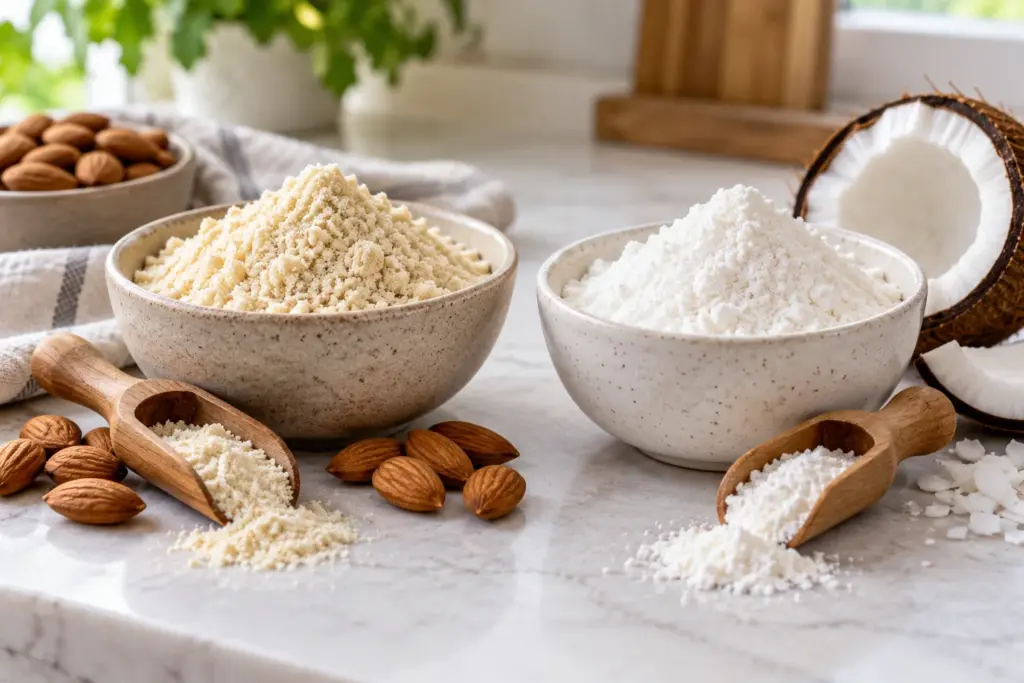
Almond flour, coconut flour, heavy cream and plant-based beverages also need to be considered. A ready mix may include sugar, starch or components that do not exist in the plain ingredient.
- In cocoa powder, check if it is mixed with sugar or other ingredients.
- In chocolate, check carbohydrates and portion weight.
- In flours, observe mixtures and allergen warnings.
- In beverages and dairy, read composition and table.
- In sweetener, check bulk ingredients and polyols.
Sweetener does not solve the entire preparation
Do not copy a universal equivalence between a teaspoon of stevia and a cup of sugar. Different products can have different concentrations and components, and the recipe needs to work with the chosen product.
Natural does not mean absence of glycemic response or clinical suitability. Polyols should not be fully deducted by a universal formula. The WHO recommendation on sugar-free sweeteners for weight control excludes polyols and people with preexisting diabetes; this does not constitute a clinical approval for the excluded groups.
Simple ideas, without macro promises
Unsweetened plain yogurt with unsweetened cocoa, a sugar-free gelatin preparation made according to the package or a weighed amount of chocolate can be presentation ideas. The composition depends on the actual products and what you add.
These ideas are not tested recipes by CetoPlan. They do not receive ready-made nutritional values nor demonstrate that the dessert guarantees ketosis.
Calculate by final yield
Add the carbohydrates of all ingredients and divide by the portion actually served. If the preparation is homemade, weights, composition data and final yield are necessary to obtain a per-portion estimate.
Do not assign the entire dessert only the value of one flour or the chocolate. Filling, topping, beverage and complements also enter the calculation. A small portion may differ from the measure appearing in the original recipe.
Planning the quantity before serving helps record what was consumed. This does not determine a universal portion or a weight loss effect.
Take care of allergies and storage
Milk, eggs and almonds are examples of ingredients that require attention for those with allergies. Check warnings and preparation conditions; a keto description does not resolve these restrictions.
Preparations with dairy and other perishable ingredients need proper hygiene and storage. Follow the package and a reliable recipe, without assuming that the absence of sugar protects food against spoilage.
Choose a dessert by what it contains and by the quantity that makes sense in the diet. Do not use the keto name as a therapeutic promise or as authorization to consume without considering the whole.
Related readings
- Sweeteners on keto: how to compare labels
- Almond flour or coconut flour: differences and substitutions
- How to calculate carbohydrates per serving in a recipe
- Risks and precautions before starting the ketogenic diet
Sources and limits
- Anvisa: nutrition labelling in Brazil
- FDA: understanding the Nutrition Facts label
- WHO: scope of the recommendation on sweeteners
Informational content prepared with support from artificial intelligence, without independent clinical review. It does not replace assessment by a doctor or dietitian. Meal examples are not an individual meal plan or tested recipes. The image is illustrative and was generated by AI.

Mariana is passionate about a healthy lifestyle.