In this article
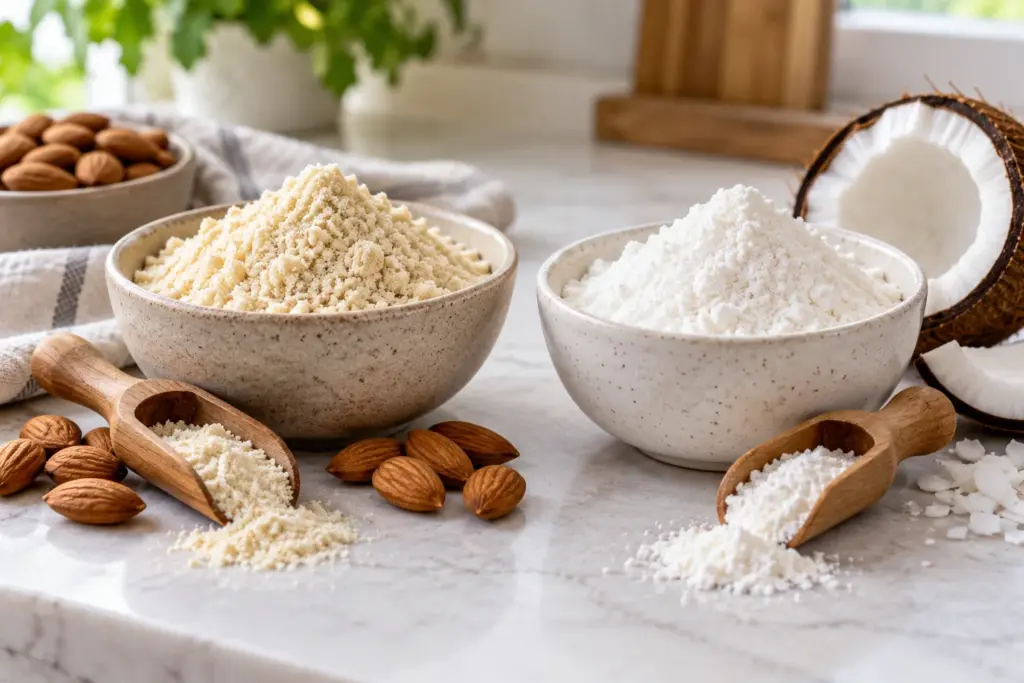
Almond flour and coconut flour are not automatic substitutes for each other. They can be used in lower-carb preparations, but the result depends on the product composition and the entire recipe.
Choosing a flour based on the ‘low carb’ term on the packaging does not answer how many carbohydrates the preparation will have or whether the dough will turn out as expected.
Compare products you actually plan to use
Read the ingredient list before comparing the nutrition table. A plain flour is different from a blend with starch or other components. Sweetened shredded coconut is also not the same product as coconut flour.
Check if the flour is defatted or has another characteristic indicated by the manufacturer. This can change the composition and culinary behavior. Comparing only the food name overlooks these differences.
- Use values per 100 g to compare products with different serving sizes.
- Compare labels that follow the same carbohydrate convention.
- Then, calculate the weight of flour that goes into the recipe.
- Include eggs, beverages, sweeteners, and other ingredients in the total.
Why the swap changes the dough
Coconut flour absorbs liquids differently from almond flour. A quantity that works in one recipe may leave another dough with inadequate consistency. Changing only the flour may also require adjustments in liquids, eggs, or preparation method.
There is no fixed substitution ratio that works for all recipes. The role of flour in a cake is not necessarily equal to its role in a pancake or breading.
How to make an adaptation with less waste
Start with a recipe that already uses the chosen flour and has been tested by the author. Follow the original measurements and instructions before making changes. If you want to experiment, make a small batch and change one variable at a time.
Record the weights used and the dough result. Volume measurements do not allow comparing flours with the same consistency as gram measurements. A homemade texture test, however, does not confirm nutritional values: the calculation depends on the ingredients and final yield.
Fiber and carbohydrate on the label
In Brazil and the European Union labels, the carbohydrate line does not include dietary fiber. Do not subtract fiber again. In the United States, Total Carbohydrate includes fiber; you must recognize the convention before comparing.
A gluten-free product can also contain carbohydrates. The expressions ‘sugar-free’ and ‘keto’ do not replace the nutrition label nor describe everything used in the recipe.
Allergies and storage
Almond flour requires attention for those with almond allergy. Check allergen warnings and possible contact with other ingredients. Do not choose a substitution as safe just because it has fewer carbohydrates.
Store the product according to the packaging and check storage conditions after opening. The suitability of the flour for your diet and culinary success are different matters; both need to be considered.
Related readings
- Bread on keto: labels, portions and alternatives
- Keto desserts: ingredients, portions and recipe calculations
- How to calculate carbohydrates per serving in a recipe
- Risks and precautions before starting the ketogenic diet
Sources and limits
Informational content prepared with support from artificial intelligence, without independent clinical review. It does not replace assessment by a doctor or dietitian. Meal examples are not an individual meal plan or tested recipes. The image is illustrative and was generated by AI.
European Union: food information regulation

Mariana is passionate about a healthy lifestyle.