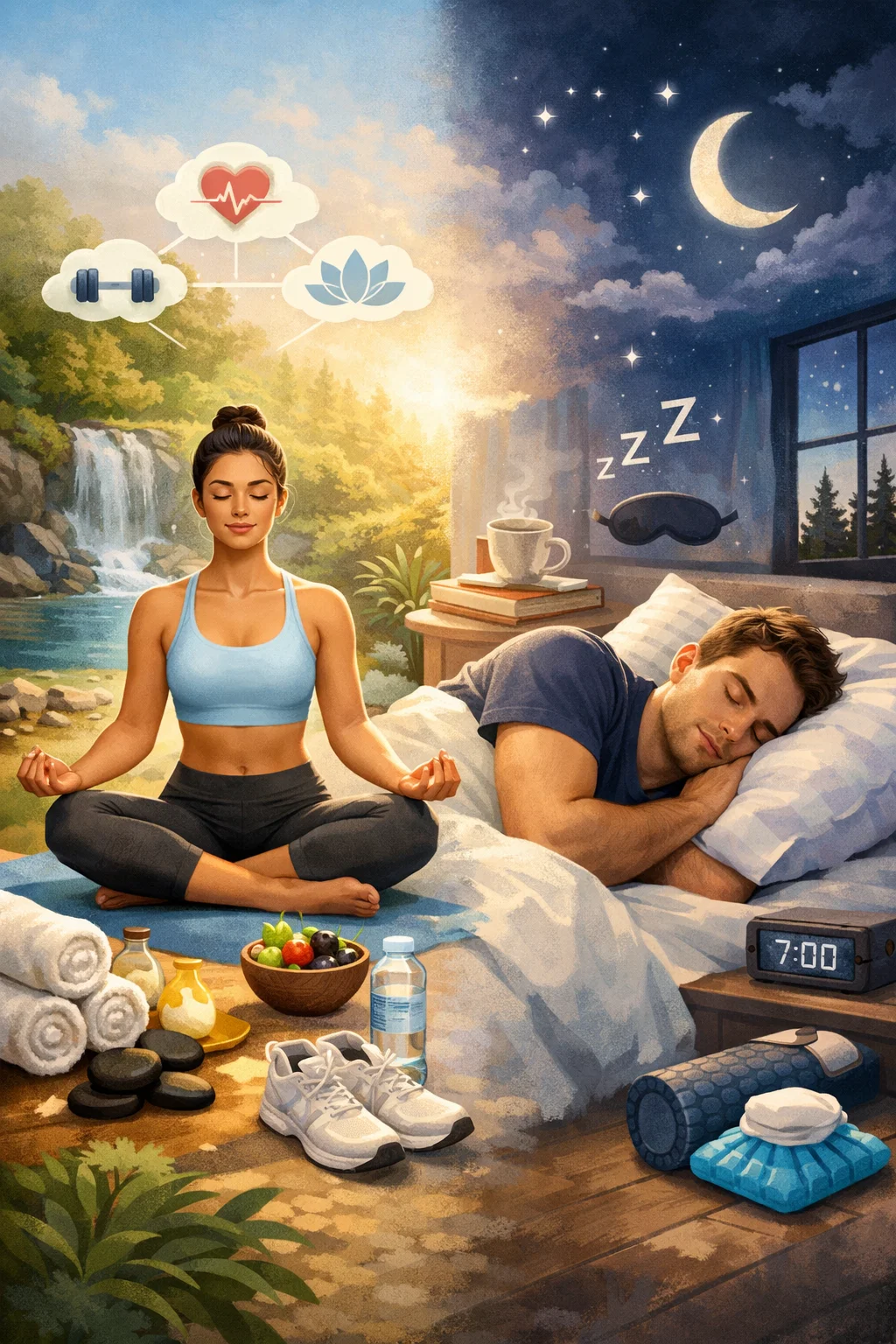
Recovery and rest are pillars of health and well-being.
In the field of health and well-being, recovery and rest are recognised as fundamental pillars for the proper functioning of the body and mind. In a daily life marked by stress, constant stimulation and lack of pauses, rest is no longer just a natural need — it has become a true strategy for health prevention.
Recovering does not mean inactivity. It means allowing the body to do what it is biologically designed to do: regenerate, rebalance and repair.
What is recovery from a health perspective?
From a health and well-being perspective, recovery refers to the physiological and psychological processes that occur when the body enters states of rest and relaxation.
These processes include:
- Cellular regeneration
- Hormonal regulation
- Muscular and joint recovery
- Memory and learning consolidation
- Nervous system balance
Adequate rest allows the nervous system to shift from constant alert mode into a state of repair and equilibrium.
Rest and the nervous system: an essential relationship
Prolonged stress keeps the body in a state of continuous tension, affecting sleep, digestion, immunity and mood. Conscious rest helps activate the parasympathetic nervous system, responsible for recovery and the feeling of safety and calm.
When we rest regularly:
- Cortisol levels (the stress hormone) decrease
- Sleep quality improves
- Concentration and mental clarity increase
- Physical and mental fatigue are reduced
The role of rest in preventing health imbalances
Lack of recovery is associated with several common modern health imbalances, such as:
- Chronic fatigue
- Insomnia
- Anxiety and irritability
- Persistent muscle tension
- Lower immune resistance
Integrating rest as part of daily self-care is a simple and effective way to support long-term health.
Simple recovery strategies for everyday life
Supporting recovery does not require drastic changes. Small, consistent practices can have a real impact on health and well-being:
- Maintaining regular sleep schedules
- Taking short breaks throughout the day
- Practising deep breathing or conscious relaxation
- Reducing stimulation before bedtime
- Integrating moments of silence or calm activities
- Prioritising activities that promote physical and mental relaxation
These strategies help the body move out of survival mode and into a state of balance.
Rest as an integral part of health-focused self-care
Health-focused self-care is not limited to nutrition or physical exercise. It also includes the ability to recognise when the body needs to pause.
Rest is a conscious choice that protects health, improves quality of life and supports overall well-being.
Final thoughts on recovery and well-being
True health is built on the balance between action and rest. By respecting the body’s natural rhythm and integrating rest regularly, we create solid foundations for a life with more energy, clarity and well-being.
Caring for your health also means knowing how to rest.