In this article
The HCG diet is one of the most talked-about weight loss diets on the internet, known for promising rapid weight loss through the use of the HCG hormone combined with a very low-calorie diet.
But does the HCG diet really work? Is it safe? And what does science say?
In this article, I explain everything you need to know about the HCG diet in a clear, professional, and evidence-based way.
What is the HCG diet?
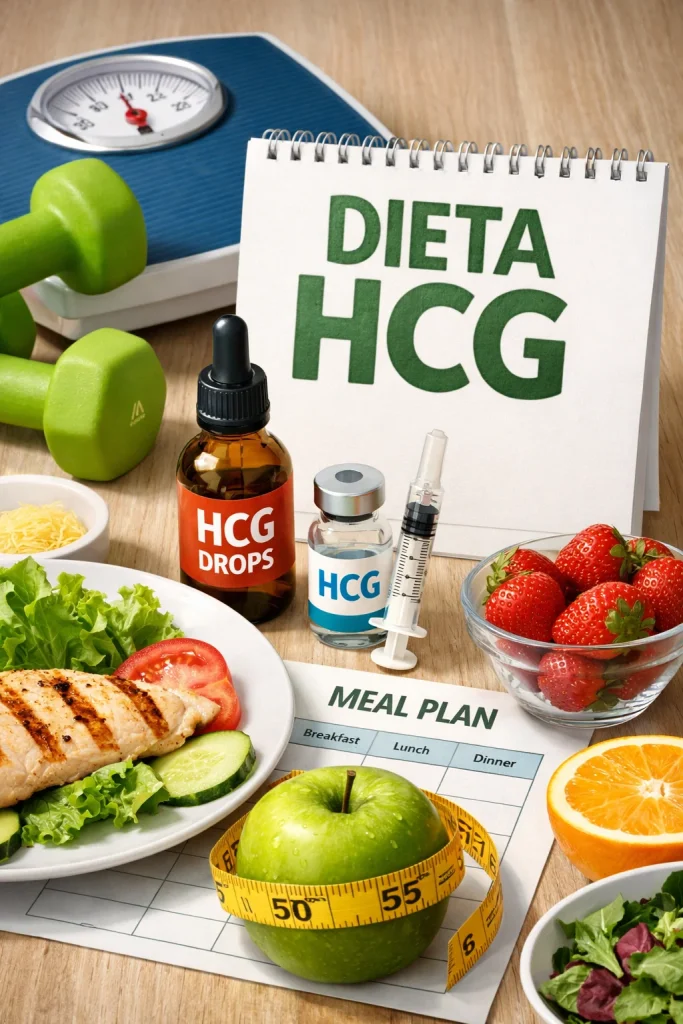
The HCG diet (Human Chorionic Gonadotropin) combines:
-
The use of the HCG hormone
-
An extremely restrictive diet, usually around 500 calories per day
HCG is a hormone naturally produced during pregnancy. In the diet, it is administered through injections, sublingual drops, sprays, or pellets.
👉 The HCG diet is often promoted as a way to lose weight quickly, especially targeting localized fat.
How does the HCG diet work?
The classic HCG diet protocol is divided into three phases:
1. Loading phase
For 1–2 days, the person consumes high-calorie foods while starting HCG administration.
2. Restriction phase (VLCD – Very Low-Calorie Diet)
-
Daily intake of about 500 calories
-
Highly limited foods
-
No fats, sugar, grains, or dairy
-
Average duration: 3 to 6 weeks
3. Maintenance phase
Gradual reintroduction of foods to try to avoid weight regain (rebound effect).
What do you eat on the HCG diet?
The HCG diet menu is very restrictive and repetitive. It usually includes:
-
Lean proteins: chicken, white fish, lean meat, shrimp
-
Allowed vegetables: lettuce, spinach, cucumber, tomato, cabbage
-
Fruits: apple, orange, grapefruit, or strawberries
-
Beverages: water, tea, or coffee without sugar
❌ Not allowed: oils, olive oil, nuts, bread, rice, pasta, sugar, or alcohol.
Does the HCG diet really work?
What science says about the HCG diet
Scientific studies show that:
-
Weight loss occurs due to extreme calorie restriction
-
HCG does not provide additional benefits for fat loss
-
There is no evidence that HCG reduces hunger or preserves muscle mass
For this reason, health organizations do not recommend the HCG diet for weight loss.
Risks and side effects of the HCG diet
The main risks of the HCG diet include:
-
Severe fatigue and weakness
-
Dizziness and headaches
-
Muscle loss
-
Nutritional deficiencies
-
Hormonal imbalances
-
High risk of weight regain (rebound effect)
-
Dysfunctional relationship with food
The HCG diet is especially not recommended for people with:
-
History of eating disorders
-
Hormonal problems
-
Past oncological diseases
-
Need for metabolic or emotional stability
Why is the HCG diet still popular?
Despite the risks, the HCG diet continues to attract people because:
-
It promises fast results
-
Gives a false sense of control
-
Produces visible initial weight loss
However, rapid weight loss is rarely sustainable.
Are there safer alternatives to the HCG diet?
Yes. Healthier alternatives include:
-
Balanced, anti-inflammatory nutrition
-
Moderate calorie deficit
-
Integrated hormonal approach
-
Emotional work on your relationship with food
-
Consistent, gentle rhythm with your body
Sustainable weight loss happens when the body does not feel in survival mode.
Conclusion: is the HCG diet worth it?
The HCG diet is not a miracle solution.
It is an extreme diet with real risks and questionable benefits.
Before starting any diet:
-
Assess your health
-
Seek credible information
-
Prioritize sustainability and well-being
Taking care of your body is a long-term process, not a race against time.
NOTE: Always consult your doctor to help plan your diet.